Playfool’s The Server Makes Digital Culture’s Hidden Upkeep Visible
At the V&A, Playfool turns attention toward the maintenance behind digital life. The commission offers creators a useful question: what keeps the work running?
Oct 12, 2026 · 2 min read
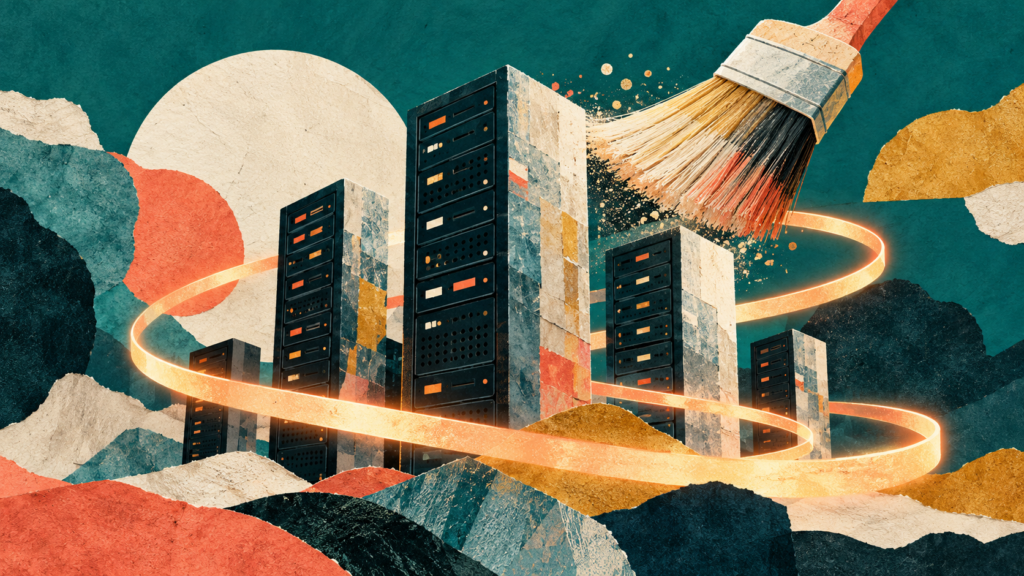
Digital culture often celebrates the moment something appears: an image generates, a game launches, a new tool goes live. Playfool’s The Server asks audiences to look at the work that keeps those experiences running.
The V&A’s Emerging Designer Commission is free to visit at South Kensington through October 18, 2026. This feature draws on the museum’s description and the studio’s public project listing; Le Cadre has not visited the installation.
A practice built around play
Playfool was co-founded by Daniel Coppen and Saki Maruyama. Its official site lists projects including Forest Crayons and Deviation Game alongside The Server.
The V&A describes the studio’s approach as exploring human agency and technology through play. For this commission, the museum connects routine collection cleaning with the physical upkeep behind AI infrastructure. Visitors are invited to participate in maintenance and care.
Le Cadre selected the project for discovery because it joins two usually separate conversations: the promise of digital systems and the everyday work required to sustain them. That is a more specific premise than another abstract debate about whether technology is good or bad.
Maintenance changes the story
A launch is easy to photograph. Maintenance is harder to turn into an announcement because success can look like nothing happened: the system remains available, the file opens, the object survives.
Our reading is that the commission’s useful move is to change the unit of attention. Instead of asking only what a technology produces, it asks what people must keep doing around it.
This does not establish a measured claim about data-centre labor or energy use. The museum’s framing gives the project a subject; understanding the full costs of digital infrastructure would require additional evidence. A design encounter can sharpen a question without becoming a statistical study.
The same question belongs in creative work
A music catalog needs accurate credits and usable masters. A photographic archive needs a naming system and backups. A community needs moderation. A website needs working links and accessible pages.
None of those tasks is as visible as a release or exhibition opening, but neglect can undo the public work. Calling them “admin” can make them sound optional when they are part of keeping the practice usable.
Try a small maintenance audit: name one recurring task, identify who performs it, and ask what breaks when it stops. Then check whether that person has time, credit and a way to document the process.
This is Le Cadre’s proposed exercise, not something the museum requires visitors to do. It translates the commission’s question into a practical conversation for creative teams.
Look beyond the launch moment
Creators do not need to turn every maintenance task into content. They do need to recognize its place in a sustainable practice.
The project’s short exhibition window makes this a timely discovery, while its central question lasts longer: what care does a work need after the exciting part is finished?
Before traveling, check the V&A’s official listing for opening details.
What overlooked task keeps your creative work possible? Bring a process or experiment to Le Cadre’s Visual Art conversation.