Mondo.NYC 2026 Opens With the Music Business Asking Who Benefits Next
Mondo.NYC’s 2026 agenda puts music rights, AI, catalog money and direct-to-fan strategy in one room. Here are the questions independent creators should carry into the week.
Oct 13, 2026 · 2 min read
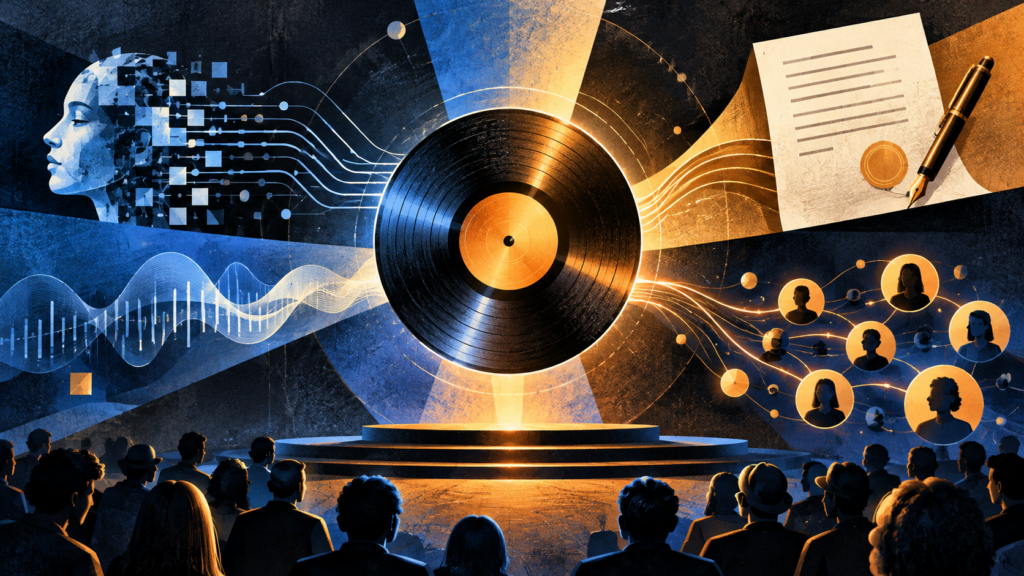
Mondo.NYC returns to New York from October 13–16, 2026, with a program that places music, technology, law and artist development side by side. For independent creators, the useful story is not simply that another conference has opened. It is how closely this year’s agenda mirrors the decisions artists are already being asked to make: who controls the work, who can train technology on it, who collects the revenue and how much access to fans an artist actually owns.
The agenda is a map of current pressure points
The official schedule begins with sessions on the state of the music business, creativity and legal protection, artist development, direct-to-fan strategy and investment in music rights. Later programming moves through generative AI, global policy, publishing, royalty systems, touring and artist-centered technology. Mondo also pairs the business conference with showcases for emerging artists.
Those are confirmed features of the published program. The interpretation is ours: taken together, they show an industry trying to solve a power problem, not merely a technology problem. New tools may make production and distribution faster, but speed does not answer who owns the resulting value.
Three questions creators should follow
1. Is “artist-centered” measurable?
Platforms and services often describe themselves as artist-first. Creators should look for the operational details: transparent fees, usable data, clear accounting, exportable fan contacts and contract terms that do not quietly trade long-term rights for short-term access. A creator-friendly promise matters only when it can be checked.
2. Where does AI permission begin?
The conference includes multiple sessions involving AI, copyright, attribution and trust. The practical issue for musicians is consent across several layers: a composition, a sound recording, a voice, a likeness and a performance are not interchangeable. Any serious discussion should identify which right is involved, who can authorize its use and how a creator can challenge misuse.
3. Can direct-to-fan become more than a slogan?
Direct-to-fan business is most valuable when the artist controls the relationship. A mailing list, ticket-buyer history or community membership can remain useful even when a social platform changes its algorithm. The strongest systems connect attention to something durable: an email address, a purchase, a membership or a repeatable live relationship.
What independent artists can do this week
- Write down which rights you own in every released track and where the registrations live.
- Audit which platforms let you export audience or customer data.
- Ask any AI or marketing vendor what content it retains and how opt-out requests work.
- Compare conference claims with the actual contract, dashboard or payment statement.
Mondo.NYC can surface important ideas, but panels are not outcomes. The real test will be whether the week produces clearer terms, better tools and practical routes for artists who do not arrive with major-label leverage. For creators watching from outside the room, that is the conversation worth following.
Sources
Join the conversation: What are you working on right now, and which part of the business feels hardest to control?