Independent Artist EPK Checklist: Build One Link People Can Actually Use
A practical electronic press kit checklist for independent musicians—what to include, what to leave out and how to make the page useful to bookers, press and partners.
Oct 13, 2026 · 2 min read
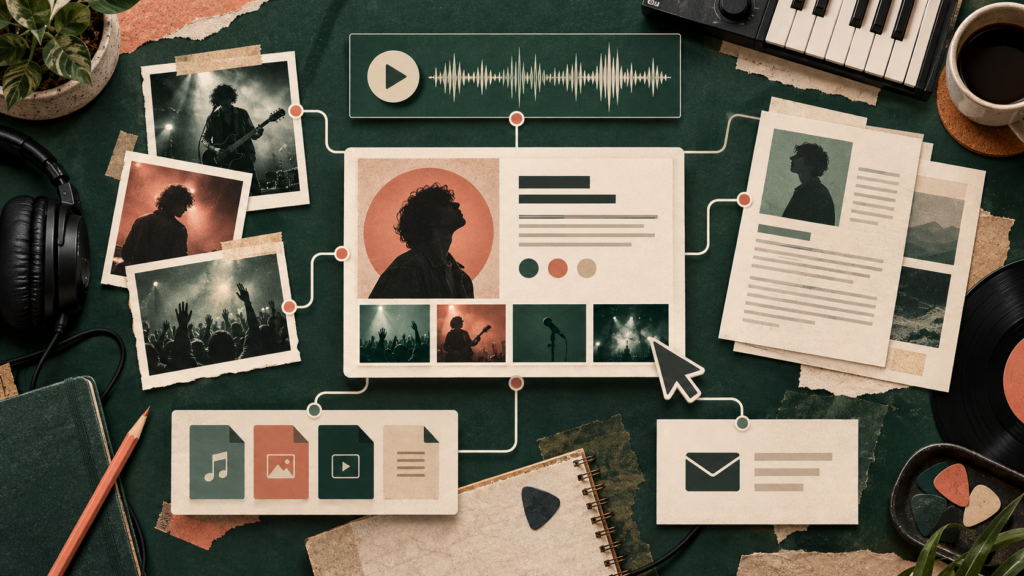
An effective electronic press kit gives a booker, journalist, promoter or potential partner the facts and assets needed to act—without making them search across five platforms. The best format is usually one clean, mobile-friendly link supported by clearly named downloadable files.
Apple Music for Artists describes an EPK as a professional calling card, while MusicNSW frames it as an online artist résumé. Both ideas are useful, but an EPK should not try to tell your entire life story. Its job is to reduce friction.
The independent artist EPK checklist
1. A short bio and a longer bio
Prepare a sharp third-person version for quick listings and a longer version for features or applications. State where you are based, what kind of music you make and what distinguishes the current chapter of your work. Remove claims such as “genre-defying” unless the music and context make the description meaningful.
2. Your strongest music first
Lead with the release you want someone to hear now. Include streaming links, release date and essential credits. If the music is unreleased, label private links clearly and confirm that permissions work before sending them.
3. Approved photos in two orientations
Offer at least one portrait and one landscape image at useful resolution. Add the photographer’s name, required credit and a short usage note. A downloadable image is not automatically permission for every commercial use, so keep the terms visible.
4. One clear contact
List the person who should receive booking, press or business questions, along with a dedicated email address. If different representatives handle different requests, label their roles. Do not make the recipient guess who is responsible.
5. A concise proof section
Add a small number of verifiable signals: selected performances, support slots, press coverage, playlist placements or audience figures with a date and source. A focused list is stronger than a crowded wall of logos. Never turn estimates into facts.
6. Current news and next steps
State what is happening now—a release, tour, video or collaboration—and what you are seeking. “Available for regional support dates in spring” is more useful than “big things coming.”
A simple structure that works
- Artist name, location and one-sentence introduction
- Featured track or video
- Short bio with a link to the long bio
- Two approved press images
- Selected achievements and current plans
- Contact, website and social links
- Download folder for high-resolution assets
Keep the public page light and place large files in a well-organized folder. Use plain filenames such as ArtistName_PressPhoto_Photographer_Landscape.jpg. Review the kit before every campaign and add a visible “updated” date.
Common EPK mistakes
Broken private links, oversized downloads, outdated biographies and uncredited photographs all create avoidable doubt. So does confusing an EPK with a pitch. The kit is the source of truth; the email should explain why it is relevant to that particular recipient.
Finally, make sure the credits inside the EPK match the metadata delivered with the music. Le Cadre’s music metadata checklist can help you check names, roles and identifiers before release day.
Sources
- Apple Music for Artists: Why an electronic press kit matters
- MusicNSW: Electronic Press Kit Essentials
Join the conversation: What is the one asset you always wish an artist’s EPK included?