Three Studio Museum Artists in Residence Make Memory Material
Derriann Pharr, Simonette Quamina and Taylor Simmons approach memory through different materials in the Studio Museum in Harlem’s 2026 residency exhibition.
Oct 13, 2026 · 2 min read
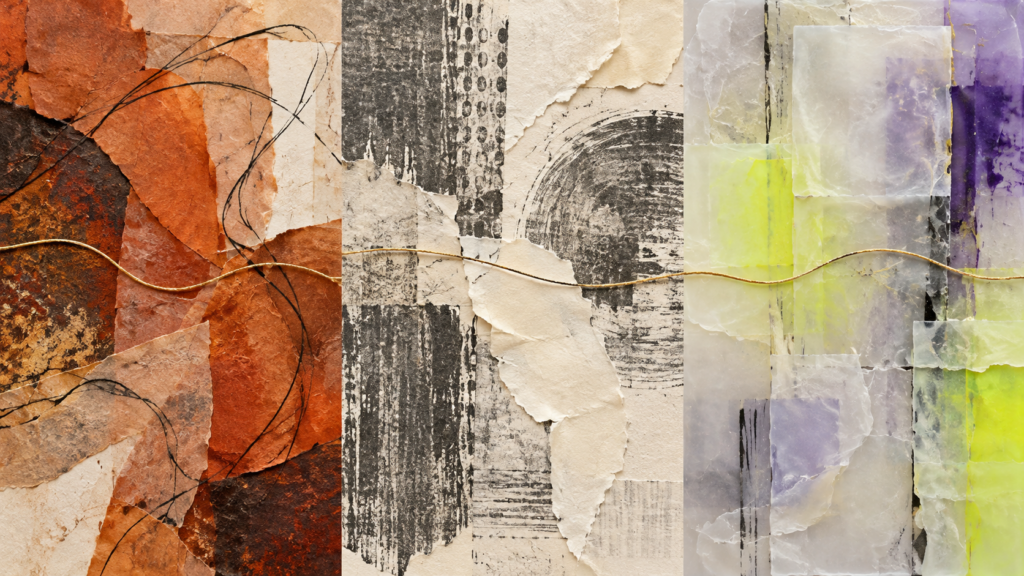
The Studio Museum in Harlem’s 2026 Artist-in-Residence exhibition brings together Derriann Pharr, Simonette Quamina and Taylor Simmons through January 3, 2027. Their work spans painting, collage, printmaking, drawing, sculpture and mixed media, but the productive connection is not simply range. Each artist uses material to make memory unstable, embodied and open to revision.
This is a researched preview based on the museum’s published materials, not an in-person exhibition review.
A residency entering a new chapter
The trio is the first cohort to work in the Studio Museum’s purpose-built home. The institution says its residency began in 1969 and has supported more than 150 artists of African and Afro-Latinx descent. That history matters because the program is not only studio space; it places developing practices inside a lineage, a community and a public institution.
The exhibition title, A sustained becoming, offers a useful way to read the cohort. “Becoming” suggests that identity is not a finished statement. It is repeatedly made through bodies, places, inherited images and the physical decisions of the studio.
Derriann Pharr: the figure as transformation
Pharr is an interdisciplinary artist based in Birmingham, Alabama. The museum describes her practice through identity, safe spaces, memory and the body. Her mixed-media figures move away from naturalistic representation through fluid contours and gestural marks.
That refusal of a fixed outline is more than a formal style. It gives the figure room to exist beyond narrow expectations placed on marginalized bodies, particularly in the American South. In Pharr’s work, self-representation becomes an active negotiation rather than a final portrait.
Simonette Quamina: printmaking as reconstruction
Quamina makes monumental prints and graphite-based collaged drawings. Her biography connects Canada, the Caribbean, South America and New York, and the museum positions her work around personal and collective histories as well as romanticized ideas of the Caribbean.
Printmaking carries history in its processes—pressure, transfer, repetition and reversal. Quamina’s combination of technical tradition with collage allows an image to behave like memory: layered, partial and changed each time it is handled.
Taylor Simmons: everyday images become an archive
Simmons works across painting, prints and drawing, using acrylic, oil, airbrush and wax. His neon-colored compositions draw from music, found photographs and viral video fragments, moving between figuration and abstraction.
The source material may be familiar, but the accumulation changes its meaning. Atlanta memories, New York life, humor, masculinity, play, work and rest become a visual archive without settling into one clean narrative. The haze is part of the point: remembering is also editing.
Why these three practices belong together
Pharr stretches the body, Quamina rebuilds cultural memory through print and collage, and Simmons samples the everyday until it becomes atmosphere. The shared lesson is that material is not decoration added after an idea. The method—drawing, layering, transferring, scraping, remixing—is part of how meaning is made.
For artists, that makes this exhibition worth following beyond a list of names. It asks a durable studio question: what can your chosen material say that the subject alone cannot?
Sources
- Studio Museum fall 2026 exhibition announcement
- Derriann Pharr — Studio Museum
- Simonette Quamina — Studio Museum
- Taylor Simmons — Studio Museum
Join the conversation: What material or technique is changing the way you think about your own work?