An-My Lê Photographs the Night Sky Without Leaving History Behind
A new Art21 film follows An-My Lê as the photographer turns toward the night sky and builds an outdoor installation that places the image back inside its landscape.
Oct 16, 2026 · 3 min read
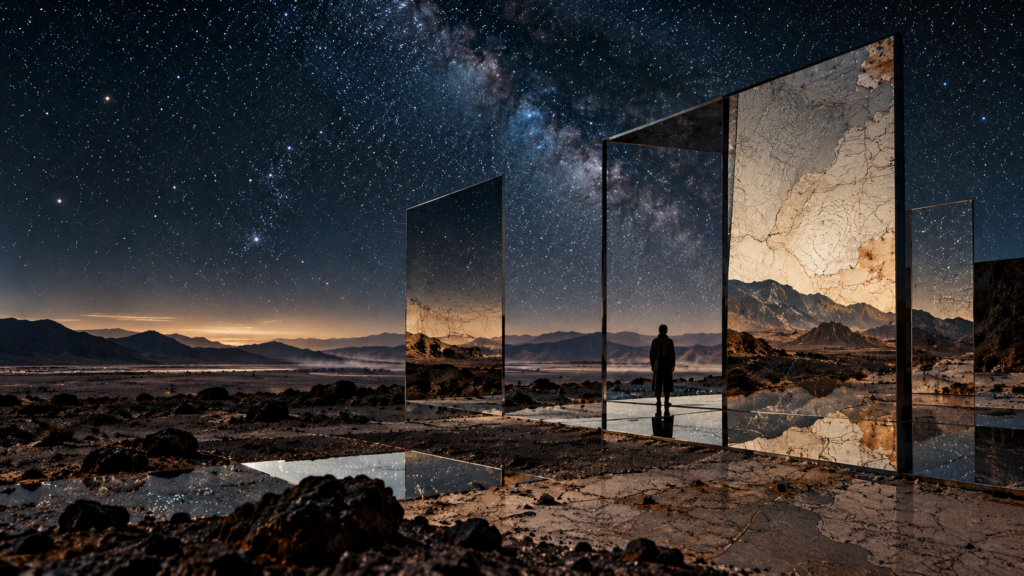
In Art21’s new short film An-My Lê: Photographing the Night Sky, the sky is not an escape from the history held in the land below it. The photographer turns toward stars and darkness while returning to the California desert connected to her 2003–2004 series 29 Palms, extending a practice long concerned with conflict, landscape and the unstable line between documentation and staging.
The film premiered October 14 and was directed by Sue Ding. It follows Lê during a residency at Andrea Zittel’s High Desert Test Sites in Joshua Tree, where she developed Way Station (2026), her first outdoor installation. Photographs of the night sky sit inside open desert pavilions alongside mirrored panels that reflect viewers and the surrounding terrain.
The landscape remains an active subject
Art21 describes Lê’s career as an examination of former battle sites, military exercises, reenactments and the way media shapes perceptions of conflict. Her earlier 29 Palms photographs were made around Marine training exercises in the California desert. In the new work, the subject appears to shift upward, but the film resists treating the stars as neutral scenery.
Lê says the sky offers comfort amid political and social chaos while remaining “a kind of landscape of conflict.” That tension prevents the pictures from becoming a simple retreat. Navigation, surveillance, borders, myth and military power have all looked to the sky. Beauty does not erase those associations; it makes the viewer hold them beside wonder.
Way Station changes what a photograph contains
A photograph usually removes a view from its location and delivers a framed version somewhere else. Way Station returns the images to the landscape that produced them. The mirrored panels complicate that return by placing the viewer and present conditions beside the photographed sky.
This is an established description of the installation from Art21. Le Cadre’s interpretation is that the work turns context into material. The surrounding light, weather, terrain and visitor are not background to a finished image; they continually alter the encounter.
That idea is useful beyond installation art. Photographers deciding where and how to show work can ask whether the presentation merely displays an image or adds a meaningful relationship. Scale, sequence, reflection, sound, architecture and location can all change what the audience notices—without requiring spectacle for its own sake.
A new subject can still belong to an old question
Creative development is often described as reinvention: abandon the recognizable subject and produce a dramatic new chapter. Lê demonstrates another path. The night sky is new within her practice, but the questions remain connected to fragility, power, representation and place.
That continuity matters. A mature practice does not have to repeat its imagery to remain coherent. It can carry an ethical or formal question into unfamiliar material and allow the new subject to pressure the old assumptions.
The film also makes process visible without pretending that access explains everything. We see an artist testing scale and site, but the work retains ambiguity. For creators, that is a reminder that sharing process can invite an audience closer while leaving room for the art to exceed its explanation.
Le Cadre’s guide to editing a photography portfolio for the work you want offers a practical counterpart: selection creates a professional argument, while Lê’s new installation shows how presentation can turn that argument back into an experience.